
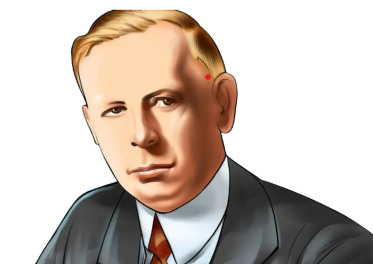
I have been called many things over the years.
A genius.
A gambler.
A legend.
A warning.
Most of those labels are convenient. None of them are useful.
If you are here looking for Jesse Livermore lessons because you want shortcuts, you will be disappointed. If you are here because you have already lost money despite being intelligent, disciplined, and sincere, then you are exactly who this is for.
I did not fail because I misunderstood markets.
I failed because I understood them — and still could not control myself.
This is not a story about success.
It is a record of cause and effect.
1: The Market Does Not Care About Your Effort
I learned early that the market does not reward effort.
I watched men exhaust themselves with study, logic, and conviction — and still lose. I watched others, less informed and less emotional than me, make fortunes simply by waiting until the market agreed with them.
The market does not care how badly you want to be right.
It does not care how much work you have done.
It does not even care whether you are correct in theory(charts or fundamentals).
It cares only about alignment.
This is one of the most misunderstood lessons. Traders believe effort should be compensated. They believe preparation earns cooperation. It does not.
I paid for this misunderstanding more than once.
2: Being Early Is Not Intelligence
Most of my worst trades began the same way.
I was early.
Early feels clever. It feels like foresight. It feels like control. But early is none of those things. Early is exposure.
When you are early, you stand alone. You stop listening and start explaining. You measure less and defend more. You tell yourself the market will “come around.”
It might.
It also might not.
And by the time it does, your judgment may already be compromised.
I was early more times than I can count. I mistook that for insight. That mistake alone explains a large portion of my losses and remains one of the most expensive lessons traders ignore today.
3: Position Size Changes Who You Are
I did not lose my fortunes because I was wrong about direction.
I lost them because of size.
Size changes the mind. Not dramatically. Quietly.
A position that is too large will make you patient when you should be decisive. It will make you hopeful when you should be neutral. It will make you brave in public and anxious in private.
I held positions I would have exited instantly if they were smaller. I defended ideas not because they were correct, but because admitting error at that size felt unbearable.
This is not psychology.
This is mechanics.
Large positions do not merely risk capital.
They rewrite behavior.
Among all Jesse Livermore lessons, this is the one most traders understand intellectually — and violate emotionally.
4: Pattern Most People Miss
Over time, I noticed a pattern in my worst decisions.
I was early.
I was too large.
And I was emotionally invested before the market was.
If even one of these was true, the trade was already dangerous. When all three were present, the outcome was only a matter of time.
This pattern is not unique to me. It repeats across markets and generations. That is why Jesse Livermore lessons continue to matter long after my era ended.
Markets change. Human reactions do not.
5: Sitting Tight Is the Hardest Skill
People quote me for saying that the big money is made by sitting.
They misunderstand what sitting costs.
Sitting means watching profits fluctuate without interference. It means tolerating boredom without inventing reasons to act. It means letting time do the work while your instincts demand participation.
Most people cannot do this.
I often could not.
When I made money, it was because I sat. When I lost it, it was because I interfered.
The market does not punish you for being wrong quickly.
It punishes you for being right impatiently.
This may be the most painful Jesse Livermore lesson of all.
6: Success Is More Dangerous Than Failure
Many believe I failed because I lacked discipline.
That is incomplete.
I failed because discipline becomes harder after success, not after failure. Failure tightens you. It humbles you. Success loosens you. It convinces you that rules were necessary then, not now.
Success whispers that discretion has been earned.
That voice is calm. Logical. Persuasive.
It destroyed me.
Markets do not destroy beginners first.
They wait for competence.
This is one of the Jesse Livermore lessons no one wants to learn in advance.
7: About Risk
For many years, I misunderstood risk.
I thought risk was volatility.
I thought risk was drawdown.
I thought defined losses meant safety.
I was wrong.
Risk is not how much a position can lose.
Risk is how much of yourself you give to it.
If a trade follows you home, if it changes how you sleep, if it forces you to rehearse explanations, you are no longer trading. You are negotiating with fear.
I learned this too late.
Why These Lessons Still Matter Today
If I were trading now, with faster markets and louder voices, the danger would be greater, not smaller.
More tools do not create more discipline.
More information does not create more restraint.
More leverage does not create more skill.
They simply reveal who you already are.
That is why my lessons remain relevant. They are not about markets. They are about behavior under pressure.
The Question I Leave Behind
If you take one thing from my life, let it be this:
The market will forgive ignorance.
It will not forgive arrogance disguised as confidence.
You do not need to be smarter than the market.
You need to be harder to seduce, harder to provoke, and quicker to step away.
I failed that test more than once.
You do not have to.
Harsh is the creator of Dalal Street Lens, where he writes about investing, market behaviour, and financial psychology in a clear and easy way. He shares insights based on personal experiences, observations, and years of learning how real investors think and make decisions.
Harsh focuses on simplifying complex financial ideas so readers can build better judgment without hype or predictions.
You can reach him at imharshbhojwani@gmail.com
More from Dalal Street Lens
 The ₹242 Bag That Broke India’s Farm Belt
 Pakistan’s Peace Dividend — and India’s Invisible Loss
 Most Investors Misread Accent Microcell. This Is the Real Business.
 Costco Business Model Explained: Why Costco Feels Different the Moment You Walk In
 McDonald’s Business Model Explained: Why It’s Not Really About Burgers
 Karnataka Bank Earnings Call Analysis – November 2025
 How Nassim Taleb’s Trading Philosophy Changed the Way I Look at Confidence in Markets
 Retail Investors vs Institutional Investors
 Second Order Thinking in Investing: Four Decisions I Had to Learn the Hard Way